
If These Batteries Are So Dangerous, Why Are We Using Them?
Lithium-ion batteries are now a fundamental part of modern life. From smartphones and laptops to electric vehicles (EVs) and large-scale battery energy storage systems (BESS), their widespread adoption is driven by performance, efficiency, and sustainability goals — not by convenience alone.
The key reason lithium-ion batteries are used is their high energy density. They can store large amounts of energy in a relatively small, lightweight package, while also delivering high power when required. They are rechargeable, long-lasting, and far more energy-efficient than many traditional alternatives. These qualities make them ideal for portable electronics and essential to the electrification of transport and renewable energy infrastructure.
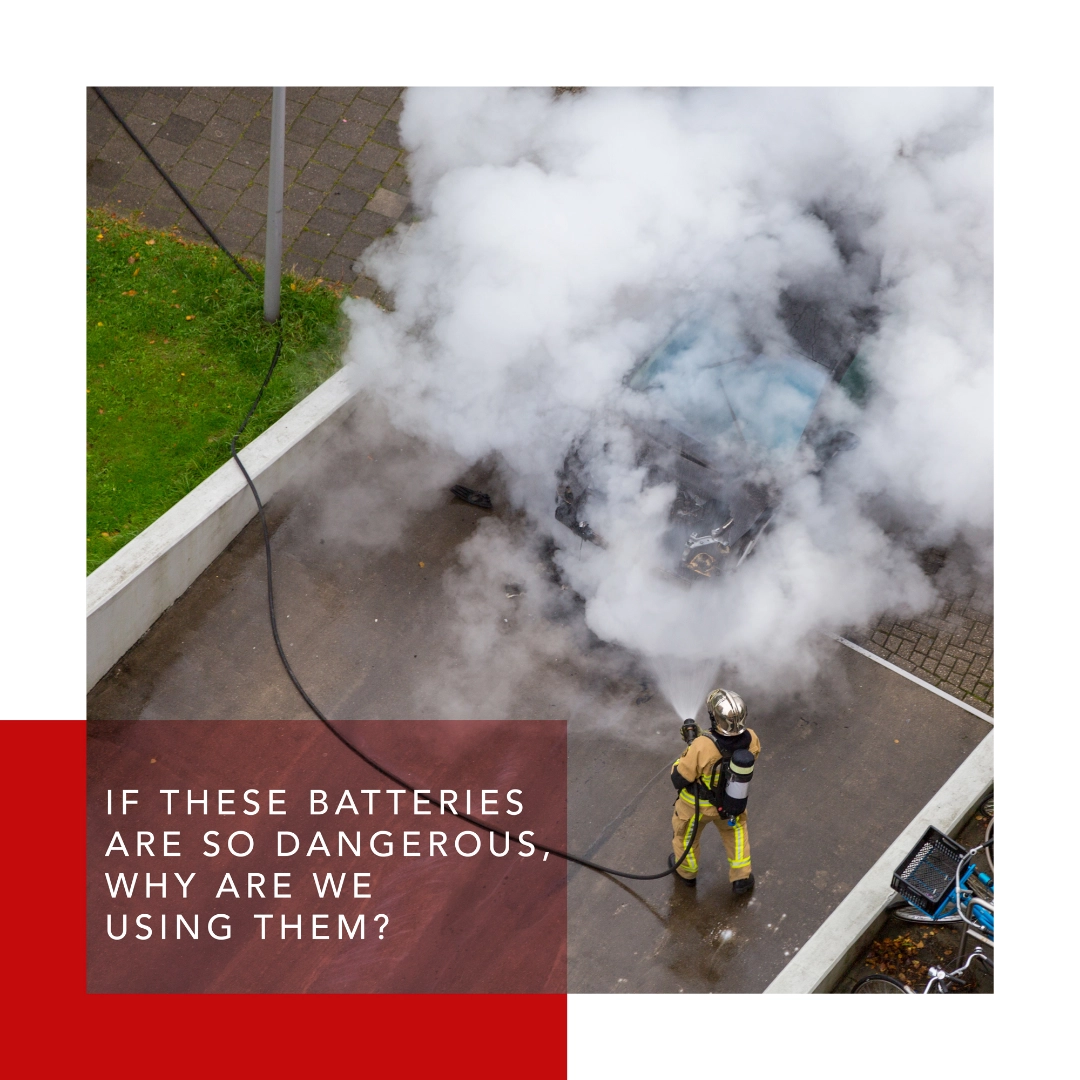
These fires can burn at temperatures exceeding 1,000°C, hot enough to compromise steel, concrete, and other structural materials. Extinguishing them using traditional firefighting methods is extremely challenging, often requiring thousands of litres of water or prolonged submersion.
Despite these risks, lithium-ion batteries remain central to the global push toward net-zero carbon targets, including the UK’s commitment to decarbonise transport by 2050. EV adoption, charging infrastructure, and energy storage systems are expanding rapidly as part of this transition.
The challenge, therefore, is not whether we should use lithium-ion batteries, but how we manage the risks responsibly. This is where proactive monitoring, early detection, and specialist response equipment become critical. With the right safety systems in place, businesses can support a cleaner future while protecting people, property, and infrastructure from avoidable harm.

PROTECTING YOUR ASSETS. SAFEGUARDING YOUR PEOPLE.